
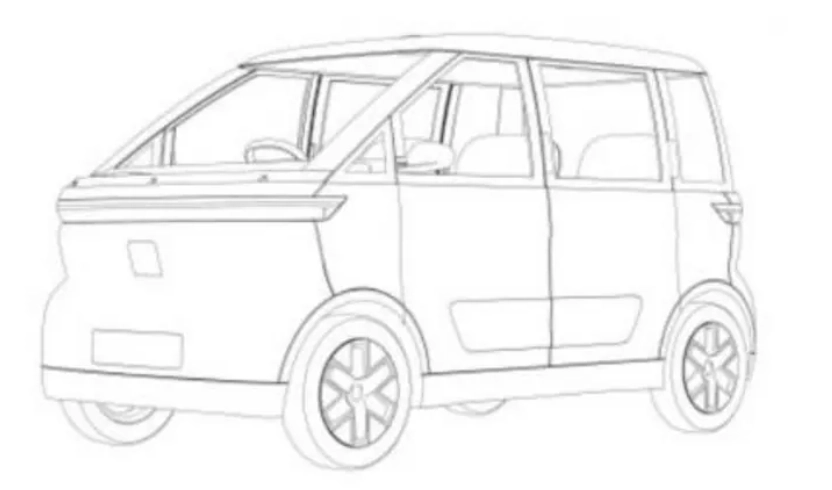
Ola Electric has marked its biggest step into the passenger electric vehicle segment by filing a design patent for its first electric car in India. The patent reveals a compact, four-door hatchback with a tallboy stance and minimalist design, visually reminiscent of the MG Comet EV. This urban-focused EV features wheels pushed to corners for maximized space efficiency, modern LED light bars, and will be based on Ola’s upcoming Gen 4 modular platform.
The vehicle will be powered by Ola’s indigenous 4680 Bharat battery cells and a newly developed 16 kW electric motor, promising about 15% better energy efficiency compared to its Gen 3 platform.
Product Specs and Future Roadmap
- Platform: Ola Electric’s new Gen 4 modular architecture designed to underpin a range of EVs including scooters, three-wheelers, and passenger cars.
- Battery: 4680 Bharat cell, recently validated by the Automotive Research Association of India (ARAI).
- Motor: 16 kW electric motor promising improved performance and efficiency.
- Design Philosophy: Space optimization with a modern aesthetic targeted at urban consumers.
This car signals Ola’s intention to become a full-spectrum EV manufacturer with offerings spanning two, three, and four-wheel segments, enabling economies of scale and future product innovation.
Recent Product Launches and Innovations
- Ola Shakti (October 2025): Ola’s first fully indigenous Battery Energy Storage System (BESS) for homes and small businesses, AI-powered and weatherproof, aims to redefine energy storage with modular, scalable solutions built on 4680 Bharat cells.
- Scooter Range Expansion: Ola continues to offer multiple scooter variants including S1 X Plus and S1 Pro Sport, targeting urban mobility with features such as large touchscreen displays, connected app integration, and robust battery performance.
Customer Sentiment and Criticism
Despite Ola’s aggressive expansion into the four-wheeler space, significant criticism surrounds the company’s electric scooters:
- Users frequently complain about battery issues, frequent breakdowns, and poor after-sales service.
- Incidences of scooter malfunctions leading to unsafe conditions have increased, such as unexpected brake engagements.
- Social media and user forums are awash with negative reviews urging Ola to improve reliability and customer support before diversifying into cars.
- The prevailing public sentiment emphasizes trust recovery in scooters as the priority for Ola Electric.
Navigating Challenges and Market Potential
Ola Electric stands at a crossroads—while its foray into the car segment underscores ambitious growth, stakeholder confidence largely hinges on its ability to rectify ongoing scooter-related challenges. Improving product quality, after-sales infrastructure, and customer experience will be fundamental to sustaining brand value as it works to compete with established EV two-wheeler players like Ather, Bajaj, and TVS in India’s growing electric mobility market.
Conclusion
Ola Electric’s patent filing for a compact electric car demonstrates its strategic evolution into a multi-vehicle EV manufacturer. Powered by indigenous battery technology, the new Gen 4 platform lays a foundation for a broad electric vehicle portfolio. However, amidst product innovation, Ola must urgently address existing customer pain points in its electric scooter lineup to restore trust and consolidate its position as a leader in India’s electric mobility revolution.

